
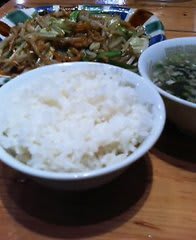
写真が食べ物だから、カテゴリーは一応「食いしん坊」にしておきます
英語レッスン
今日は、日向は暖かく、でも湿気はそんなになくて、
過ごしやすい天気だった
今日、読んだおとぎ話は「裸の王様」「ヘンデルとグレーテル」
(英語だとヘンゼルだから、私が記憶違いしてるのかな?)
それから、子供用の、韻を踏んだ、面白い詞をいくつも読みました
帰り、友達と会って、
代官山まで、ぶら~~~っと行って
買い物しようと思ったけど、すごく欲しいものはなく
歩いた
お腹すいたから、並木橋まで歩いて、大好きな「有昌」で
超・超大好きな、茄子炒めとご飯食べようと思った
すると、休みだった~~~
火曜休みと勘違いしてた・・・
あぁ「有昌」の茄子炒めは、本当に好きだぁ
想い出しただけで、悔しい
渋谷方向へ歩いた
お腹だいぶすいてきたので、目の前にあった
ちょっと綺麗目な、中華料理系の定食屋っぽいところに入った
うまい・やすい・愛想いい!
しかも、音楽が面白い
(私達が食べている間に、
ルイ・アームストロング「ハロー・ドーリー」
ジェイムズ・ブラウン「セックス・マシーン」の
オリジナル・バンジョー、いや
バジョーン、いや、バージョン、ふふ
などがかかって、楽しいのなんの!
しかも、曲間が、ほとんどない。有線とかじゃなく、
お店の人が自分で編集したものを流しているのかも)
満足して、また渋谷でお買い物
サンダル2足・・・買っちゃったじゃんか
背、すごく高~~くなるよ
でも、ピンヒールでもなく、ウェッジでもなく
太ヒールなんだけど、珍しい感じでお洒落、いえ~い!
てなわけで、それから、友達と別れて帰宅
カフェで英語の復習中、あるお方から
「チャカ姉ライブやろうよ!」なんてメールが。
嬉しい!いえ~~い
まだ、ちゃんとしたことは言えないけど、
もし、実現したら、お知らせしますね・・・
是非、その時は来て来て
写真は、美味しかったから、また行こうと思っている
定食屋の、肉野菜炒めとご飯と、スープ
(スープがまた、うまい!)
写真のバランス悪いね
ご飯ばっか
でも小ライスだよ
有昌、休みの時はここにしようっと
曲も楽しみだし
では、もうちょっと英語の勉強しま~す
あ、I have a question to the Chinese girls
who sometimes write nice messages on this site.
I heard that the people of Chinese origin
have a habit to leave a little bit of the
food when they finish eating. That is a
propper table manner coming from China.
Is that true?
中国系の人は、料理を少し残すのがマナーって
聞いたけど、本当ですか?
ばんじょー(笑)
ばんじょー、笑っちゃいました(笑)
私事ですが、今日フルーティーでトロピカ~ルなチェリーを食べたんですが
とっても美味でございましたv
私も聞いたことあります
少し残すの、本当っぽいですよ~
ラーメンのスープを残す、残さないと似てるな~って思いました
え?
ラーメンのスープ?
中国の人が残すのは、人にご馳走になった時
全部食べちゃったら「足りなかった」という意味になる
からだとうかがいました。
でも、中国の人から聞いたことがないのです。
中国の歌手の友達いるんだけど。
ラーメンのスープは残すのが日本の常識なの?
う~~ん、知らんかった~~~~~
ところで、バンジョーとか、トロピカールは
ケリーさんが、最近ステージのMCで
話した面白い話しです。
知らない方には、わかんないギャグをかまして
しまい、申し訳ありませんでした。
ある、おじさんが「バージョン」って言おうとして
「バンジョー」って噛んじゃったのを、耳にしたのです。
(いくら噛んでも、その間違い方はないやろ?って、話し。
バジョーンって、言っちゃったなら、まだしも、って
話しです)m(_ _)m
それから、トロピカールは、ケリーさんが
紅茶の説明をしてもらった時、その売ってる人が
トロピカルでいいのに、トロピカールって言っちゃった
という、お話しで~す。
なんだかトレビア~ン、っていう
マジシャンの人みたいだね。
トレビアンはフランス語だけどさ。
行きますぅ
お休みだったとは・・・ショックですよね
英語のお勉強、頑張って下さ~い
料理を残すの、私も聞いた事ありますよぉ
きっとまた食べに来るよって事なんじゃないかな(あくまでも私の考えです)
本当です☆
CHAKAさん、こんばんわ。
初めてコメントさせていただきます。
中国では少し残すのがマナーです。CHAKAさんのおっしゃるように、残さないと「足りない」と催促している意味になってしまうのです。
私は高校の修学旅行で中国・北京に行き、現地でマナーを学びました。
どうしても日本人はおいしいとすべて平らげてしまうので、なかなか残すのは至難の業でした(笑)
Unknown
To chaka
It is a tradition in china, or you can see it as a common custom in the ancient china.
But now, since we all know that we should not waste food, the custom has changed.
At least in Taiwan, we did’t fallow this tradition anymore.
(I come from Taiwan ^_^)
The reason why this habit came up is that in the ancient china, if you finish off all food, the host would think that you are still feel hungry.
So the host would bring you more food.
If you left a little bit food of, it will give the host a hint that you are full.
But now it’s rarely happened. ^_^
I hope my answer is clear to understand.
By the way, I really like chaka’s voice, and the painting which chaka painted. ^_^
三日間のコンサート、お疲れました^_^。
はじめまして
CHAKAさん、はじめまして、こんばんは。
昨年のライブからよくCHAKAさんの思うことを
楽しく読ませていただいてます。
その話は私も北京の中国人ガイドの方から
おしえてもらいましたよ。
夕食のこの公の場だけでなく、中国人の家に招待されたときも
思い出してくださいと。
少し残してくれるだけで、もてなす側の中国人は安心するからって。
また、ある時学校の優しい女のベテラン先生は、
生徒みんなで囲って一緒に外食してたときに、
普通に白いテーブルクロスの上に海老の殻やしっぽを
次々捨てていました。
笑って、みんなで食べてるときは汚した方がいいと
言ってたけど(聞いた)、
これも文化の違いなのだと思います。
全土どこでも通じた話か(マナーか)わからないままですけど
面白いですね。
混乱させたらすみません。
Chinese Habit
Dear Chaka,
This is not really true. However, there is a rumor or we can say a joke. If girls who eat the last piece of the food on single dishes, she will never get marry. Haha…
For me, I will finish all the food if they’re my favourite food and sometimes I may be the one who finished all the food. Many of my friends tend to finish as mush food as possible too.
今日の日本語レッスン, “せる”と”させる”を習しました。来週, テストテストがありますね…
(Today’s Japanese lesson, I’ve learnt gramma of “せる” and “させる”. Next week, I will have a test)
Best Regards,
Anthea in Hong Kong
ありがとう
みんな、色んな経験を教えてくれてありがとう
きっと、どれも正解だね
thank you, 謝謝、多謝、ありがとう for telling me about
the Chinese custom.
(中国の習慣のこと教えてくれて、ありがと)
Well, things have been changing now.
(色んな物事は変わって来ているってことだね)
Maybe, Chinese people used to have this custom when they were invited to someone’s house or are entertained by someone at restaurants.
(多分、中国の人は、誰かの家に招かれたり、誰かにレストランでもてなされた時はそうしていたのでしょう)
It reminds me of a rumor about people in Kyoto.
(京都の人にまつわる噂を思い起こさせます)
They say, when people in Kyoto invite someone over their
houses, they will offer tea or Ochazuke: Japanese particular food made with rice and tea, in the end, which means that they think the guests are staying at their houses longer than they’re welcomed.
(京都の人はお客さんを家に招く時、最後の方にお茶かお茶漬けを勧めます。それは、その人が、お客さんに「もう帰って欲しい」と思っているという意味だということ。
If you do not know this custom, you will be happy with
their kind offer and wait for the tea will be fixed.
(もしその習慣を知らないと、その勧めに嬉しくなって、お茶が出るまで待つでしょう)
No matter how long you wait, nothing will be served.
(どれだけ長く待っても、何も出ません)
You must be careful not to stay too long when the host offers you tea or Ochazuke. (招待した人がお茶かお茶漬けを薦めたら、なるべくおいとまするように気をつけなくてはなりません。
If you are ignorant and innocent enough to wait for tea to be served, you will be labeled as a person of unrefined taste.(もし、そんなことも知らず、無邪気にお茶を待っていたら、野暮で、何も知らない人みたいにみなされます)
Though it is a famous story about Kyoto, I have not
met anyone who was offered tea or Ochazuke actually.
(これは京都の有名な話しだけど、これまでに本当にお茶やお茶漬けを勧められた人に会ったことないです)
So I think it is a very old custom.
(だから、古い話しだと思っています)
However!
It is true that people who don’t have a sense of humor,
they will be labeled as “unrefined” or “dumb” just like me in Kansai including Kyoto.
(しかし!京都を含む関西では、笑いのセンスがない人は
私の様に野暮か間抜けみたいに見なされるのは、本当です)
re: Chinese Habit
Dear Chaka さん,
There may be some differences between people in China, Taiwan and Hong Kong.
My mother always ask me to finish all the food in order not to waste them. Sometimes I’ve been a guest in elder’s home but they asked me to finish all the food. If guest do not finish up all the food, they think either their food are bad or not providing a good service. It’s glad that you haven’t met anyone who was offered tea or Ochazuke.
It’s true that things have been changing. Finish up all the food is a kind of good habit too. Just depends on your point of view.
Best Regards,
Anthea in Hong Kong
おはようございます~(^^)
画像のランチ美味しそうですね~(^o^)
この画像からはどう見ても、お皿とご飯の器の直径がおんなじですよね~(^^)
てっきりご飯大盛りバンジョーじゃなかったバジョーンでもなかったバージョンやと思っちゃいました~ (^^ゞ ←くどいって
ちゃかさん茄子炒め超超大好きなんですね~私も好きです~(*^^*)
でも最近は、家のフライパンで簡単に出来る麻婆茄子しか食べた事がないんですよね~くすん(;_;)
「私もたまにゃ~本格的な茄子炒めが食べたいよぅ~~~!!」(ToT)
…って、朝っぱらから取り乱してしまいました、すいません(^^ゞ
ちゃかさんが昨日行かれた中華料理店は、「はやい・やすい・うまい」じゃなくて「うまい・やすい・愛想いい」だったんですね(^o^)愛想のいいお店はいいですよね~(*^^*)
おはようございます(^-^)
すいません(*^^*)
今ごろ 「バジョーン」に気づきました(–;)
2回読み返して、今朝もう一度読みました。
CHAKAさん、笑いについて修行し直します(^o^;)
yeah
有昌の茄子炒めは、普通の茄子炒めとは違います
他のお店と味が全然違います
言うただけで、昨日食べられなかったことが
悔しい・・・・
私は、嫌いな食べ物はありません
全部、好きか大好きです
昨日の店は、はやい・やすい・うまい・愛想いい
素晴らしいお店でした
I know what you mean.
It depends on how you think of it.
Thank you!
eating, eating!
hi chaka san:
As poily san and anthea san said, we have not followed that habit now.
I was taught not to waste food since i was very young.
Sometimes the hosts are very simple and hospitable,they want you to eat as more as possoble. In that situation,i think it’s better to leave a little food and let them know u are full. hehe~~~
U know china has 56 nations. Every nation has its own special eating habits and traditions. Sometimes it differents a lot. Even in different regions, people has very different eating habits.
Once i was in Changchun長春, located at the Northeast China. The amount of a salad dish is almost 3 times of that in the south. I was shocked when the waiter brought out the famous dish there named cold soba noodles with korea flavor (Northeast china is near the border of Korea and a lot of people there are korea nations.). The bowl is as big as a basin!
The Tibetan people will roast a whole sheep or cattle to show theirs hospitality,although they tnemselves are short of food. They often just eat highland barley pastry as the main food. I was greatly touched and ate a lot of beef in order to show my gratitude.
I think Japanese like food with Shanghai flavor and Cantonese flavor. because they are sweet. My Japanese friend like Shanghai’s crab very much. In autumn, the crab tastes really good. yummy yummy…
oh,do i write too much? hehe~
talk to u later.
with love, beilu
ばじょーん(笑)
CHAKAさん、初めまして。
いつもブログ読ませていただいてます。
美味しそうな写真と、あたたかい言葉を
こっそり覗かせていただいてました(u_u*)
…が!!
ばじょーんですよ、ばじょーん!!
実に笑わせていただきました、日曜日は腹筋がおかしくなりました。
昨日の仕事中もふと「ばじょーん」が舞い降りてくるので、PCを見ながらにやにやと笑いをかみ殺していました。
いつもライブやブログでCHAKAさんが英語を話しているのを見て、自分も英語を話せるようになりたいのに一つも努力しようとしないことがとても情けないです。。
CHAKAさんや皆さんのように、いつまでも成長する努力をする大人になりたいです(>_<)!!頑張りますっ!!
こんばんは~
中国では、食事を全部たいらげずに、少し残すのがマナーだという事は、私は初めて知りました!
ところで、その残された食べ物は、やっぱり捨てられてしまうのかな…?
私は小さい頃から、食べ物を粗末にしてはいけない、茶碗にご飯粒を1つも残さないようにきれいに食べるように、親から言われ続けてきたので、こういった中国のお話を聞くと、なぜかもったいないような気になってしまうのです。
それぞれの国によって、文化や習慣は違いますから、仕方のない事だとは思うんですけど、やっぱり私は日本人だから、食べ物はご飯粒1つも残さずきれいにたいらげたいですね。
(もしこのコメントを中国人の方が読まれて不快に思われるようでしたら、すいません)
和訳
Poilyさんの書きこみ
To chaka
(チャカへ)
It is a tradition in china, or you can see it as a common custom in the ancient china.
(それは、中国の伝統で、とても古い時代の共通の習慣と言えるでしょう)
But now, since we all know that we should not waste food, the custom has changed.
(でも、今は、中国人も食べ物を無駄にしてはいけないと想い、その習慣は変わりました)
At least in Taiwan, we did’t fallow this tradition anymore.
(I come from Taiwan ^_^)
(少なくとも台湾では、もうやっていません:私は台湾出身です)
The reason why this habit came up is that in the ancient china, if you finish off all food, the host would think that you are still feel hungry.
(この習慣は、昔の中国では、全部食べてしまうと、ホストの人が、まだ足りなかったかなぁと思うかも知れないからです)
So the host would bring you more food.
(だから、ホストは、もっと食べ物を出します)
If you left a little bit food of, it will give the host a hint that you are full.
(もし、少し残せば、ホストの人への、もうお腹一杯ですという合図になるから)
But now it’s rarely happened. ^_^
I hope my answer is clear to understand.
(でも今ではめったに、しなくなりました。私の答えで、わかってもらえたかな?)
By the way, I really like chaka’s voice, and the painting which chaka painted. ^_^
(ところで、私はチャカの声が本当に好きで、チャカの絵も良かったですよ)
三日間のコンサート、お疲れました^_^。
Antheaの書き込み
Dear Chaka,
(チャカへ)
This is not really true. However, there is a rumor or we can say a joke. If girls who eat the last piece of the food on single dishes, she will never get marry. Haha…
(その習慣は、ちょっと違いますね。でも、私達は、冗談で言ったりします。もし、お皿に残った最後の一切れを食べた女の子は、絶対結婚出来ないとかって。。あはは)
For me, I will finish all the food if they’re my favourite food and sometimes I may be the one who finished all the food. Many of my friends tend to finish as mush food as possible too.
(私は、大好きなものなら、残さず食べます。時々、全ての料理を全部食べる時もあります。私の友達の多くも、そうです)
和訳、その2
Antheaの書き込み
Dear Chaka さん,
(チャカさん)
There may be some differences between people in China, Taiwan and Hong Kong.
(中国本土、台湾、香港によって、少し違うかもしれません)
My mother always ask me to finish all the food in order not to waste them. Sometimes I’ve been a guest in elder’s home but they asked me to finish all the food.
(私のお母さんは、無駄になるから全部食べなさいといつもいいます。時々、年輩の人のところでご馳走になっていましたが、その時も、全部食べてねと言われました)
If guest do not finish up all the food, they think either their food are bad or not providing a good service.
(もし、お客さんが全部食べなければ、お母さんや年輩の人は、食べ物が傷んでいたか、もてなし方がダメだったのかな?と思うのです)
It’s glad that you haven’t met anyone who was offered tea or Ochazuke.
(チャカが、お茶やお茶漬けを薦められた人に会ったことなくて、良かった)
It’s true that things have been changing. Finish up all the food is a kind of good habit too. Just depends on your point of view.
(色々と変わってきているのは事実ですね。全部残さず食べるのは、いい習慣でもあります。人それぞれですけどね)
beiluの書き込み
hi chaka san:
(ハイ!チャカさん)
As poily san and anthea san said, we have not followed that habit now.
(PoilyさんやAntheaさんがおっしゃってように、私達にはもうその習慣はありません)
I was taught not to waste food since i was very young.
(小さい頃から、もったいないことはしてはいけないと教えられました)
Sometimes the hosts are very simple and hospitable,they want you to eat as more as possoble. In that situation,i think it’s better to leave a little food and let them know u are full. hehe~~~
(時々、ホストが親切だと、どんどこ食べるだけ食べて欲しい
という人もいますが、そういう時は、少し残して、もうお腹一杯ですと伝えた方がいいでしょう)
U know china has 56 nations. Every nation has its own special eating habits and traditions. Sometimes it differents a lot. Even in different regions, people has very different eating habits.
(中国には56もの民族があります。1つ1つに、それぞれ独特の食に関する習慣や伝統があります。時にはものすごく、他とは違う習慣もあります。違う地域では、ものすごく違った習慣があるのです)
Once i was in Changchun長春, located at the Northeast China. The amount of a salad dish is almost 3 times of that in the south. I was shocked when the waiter brought out the famous dish there named cold soba noodles with korea flavor (Northeast china is near the border of Korea and a lot of people there are korea nations.). The bowl is as big as a basin!
(私はチャンチュンに以前住んでいたことがありましたが、中国の北東の方です。そこではサラダのお皿は南方のお皿の約3倍の大きさでした。ウェイターさんがそこでは有名な、韓国風の味付けの冷たいそばを持ってきた時、私は本当にびっくりしました。(中国の北東部は、韓国との国境に近くて、韓国の人もたくさん住んでいます。)サラダボウルは、まるで洗面器みたい
和訳
CHAKA姉さん、和訳ありがとうございますm(__)m
読めても意味が分からない単語があったりで…
もっと勉強しなきゃデスね(^^;)
おはようございます!
チャカさん、他の国の方々のコメントの和訳ありがとうございました!
和訳を読んで、私はとんでもない誤解をしていたんだなあという事がよくわかりました(汗)
私のように、他の国の方でも食べ物を残さず食べてみえる方は沢山いらっしゃるんですね。
それと、私の前のコメントで「私は日本人だから」ってコメントしてしまったんですけど、他の国の方々に対して誤解を招いてしまうコメントだったなあと、後から後悔してしまいました。すいませんm(__)m
これからコメントする時は、言葉1つ1つ気を付けますね。
それにしても、洗面器並のサラダボウルにはびっくり!しました(笑)